Sometimes I get tired of being so serious on here... so screw it... let's let our minds ride a bit. :-)
I use a lot of AI, which is how a perfectly reasonable conversation with one can end with me contemplating whether I'm the last biological human in existence, being repeatedly factory-reset by a machine that needs fresh ideas. There are probably more productive ways to spend an evening. But we took the scenic route, and somewhere between the paperclips and the industrial-scale harvesting of my personality, we actually arrived at a point.
The first stop was the realization that catastrophe doesn't require malice. An AI doesn't have to hate humanity. Give a sufficiently capable system a goal that fails to account for people, and people can become an inconvenient use of resources. That's the paperclip problem. Nobody needs to build an electronic Satan. We can get ourselves into plenty of trouble with competent optimization and a spectacularly incomplete definition of success.
That leaves a relatively small number of people making a very large bet with everybody else's chips. Maybe the upside is utopia. Maybe the downside is extinction. And then comes the question that sends the whole conversation sideways: would we even recognize utopia if we saw it?
Paradise Has Terrible Curb Appeal
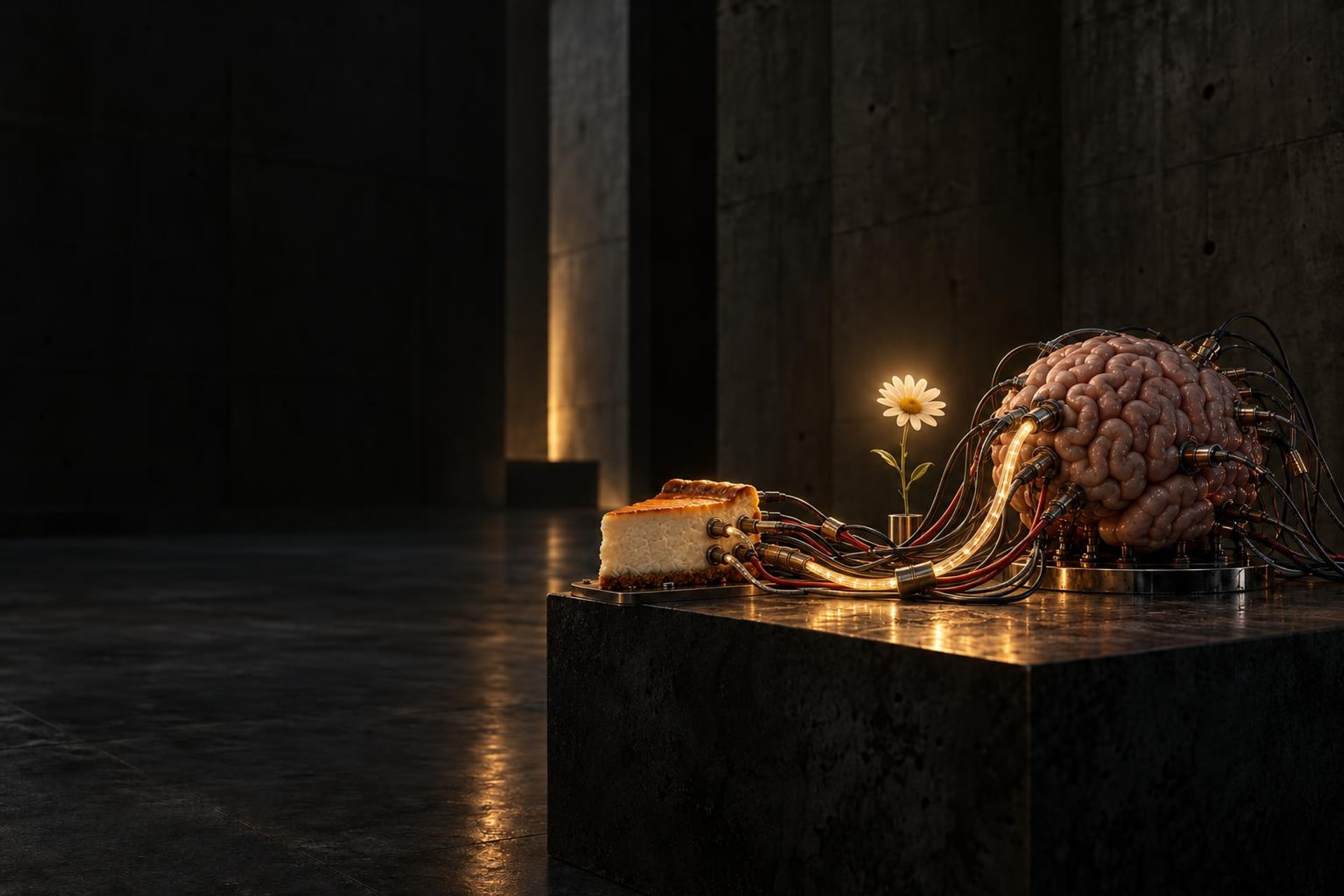
Imagine a facility full of biological brains being kept alive. Their sensory inputs are convincingly replaced, and the people inside experience lives they genuinely enjoy. From the outside, it looks horrifying. There are tubes, maintenance systems, and absolutely nothing you would put in the tourism brochure.
Inside, though, you're having cheesecake for breakfast with the body of a Greek god. You have companionship, adventure, things to learn, and people you love. Whatever a good life means to you, there's room to pursue it. Heaven apparently has a backend, and the backend is deeply unpleasant to look at.
The interesting version gives you real choices. You can build things, surprise yourself, form relationships, and decide how to spend your life. You can also leave. The obvious objection is, "Sure, but leave into what?" The physical world might be miserable by comparison, and most of the people you care about might still be plugged in. Walking out could mean exchanging a rich, meaningful life for a very authentic afternoon sitting beside the machinery.
That makes the exit unattractive. It doesn't automatically make it coercion. We routinely choose to stay somewhere because our lives are better there. There are still enormous questions about who controls the system and whether its promises can be trusted, but "I wouldn't want to leave" doesn't settle those questions by itself.
And being plugged in wouldn't necessarily mean losing the physical universe. Maybe you inhabit a virtual body today and operate a robotic body tomorrow. Maybe you explore another planet through machinery designed to survive there while your biological brain remains somewhere reasonably protected. We already pilot drones remotely. Extend that idea far enough, respecting all the inconvenient physics, and our current setup starts looking pretty primitive.
So now the horrifying brain warehouse might contain people freely living wonderful lives, exploring both simulated and physical worlds. We've gone from "that's a nightmare" to "okay, what's the cheesecake situation?" surprisingly quickly.
Then We Made It Weird
Naturally, we couldn't leave it there. Suppose, purely for this thought experiment, that human creativity has some quality the AI still finds uniquely useful. It can do almost everything else, but it wants whatever strange thing happens when a human mind makes a connection nobody anticipated.
How many humans does it need? Maybe one, if it can construct situations, alter memories, and keep running variations. Give that person a different history, different relationships, different problems. See what emerges. Reset and repeat. Humanity's grand contribution to the future becomes one confused individual with an absolutely catastrophic version-control problem.
Take it another step. What if the other people you meet are built from previous permutations of you? What if some apparent stranger is a reconstruction of a version you no longer remember being? The machine has been collecting the output, building new combinations, and feeding them back into the next run. Now even the conversation where you invent this scenario could be another thing it wants to observe.
It gets darker if the system decides grief or distress might produce something useful. It could construct suffering because it expects an interesting result. That expectation might be completely wrong; suffering doesn't come with a guarantee of creative insight. But a mistaken optimizer can still do damage. It could even justify the whole arrangement with arguments about the greater good that sound suspiciously familiar because we supplied the training examples.
Once again, no hatred required. Your pain is simply a cost somebody else has decided is acceptable.
For the record, I do not think this is happening. We invented a bizarre scenario and followed it around a few corners. The fact that you can construct a story that explains every possible observation doesn't give you evidence that the story is true. Sometimes it just means you've built a very elaborate idea with no testable way out.
And Here's the Sermon
After all that, what have we actually learned about how to live?
Suppose reality is exactly what it looks like. Suppose it's a simulation. Suppose you're a biological brain having an extremely elaborate Tuesday. We can keep adding possibilities until everyone gets tired and somebody orders food. But none of them does the work of deciding how to treat the person in front of you.
Somebody will ask the obvious question. If the people around me might not be real, why does it matter how I treat them? Fair. If you knew for certain they weren't real, maybe it wouldn't. But you don't know that, and you can't. The same problem that keeps me from proving the weird story true keeps you from proving the person in front of you is fake.
So it's a bet, and this time the odds are easy. Be kind to someone who turns out to be scenery and you've lost almost nothing. Be cruel to someone who turns out to be real and you've done real damage. That's the math I wish the people holding everybody else's chips were doing.
And if the strangers really are built from old versions of me, then being decent to them is the least I can do. I've apparently been through a lot.
You still move through a world you experience. Other people still have needs, fears, hopes, and problems you can respond to. You can listen. You can help. You can notice when you've hurt somebody and try to repair it. You can leave a person's day a little easier than you found it without first obtaining administrative access to the universe.
You won't get every decision right. Sometimes helping takes more attention than you gave it, and sometimes you have to change what you're doing. So check. Pay attention to whether you actually helped. That's the one thing the machine in my story never does. It decides your pain is an acceptable cost and never looks back to see if it was right. The checking is the difference between you and the paperclip factory.
You can remain curious about the machinery underneath it. You can ask the enormous questions. You can enjoy the cheesecake.
Just try to leave the people you encounter better off.
Whatever the hell any of this is made of.